


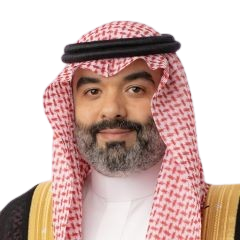


H.E. Haytham AlOhali
Governor · CST
Doreen Bogdan-Martin
Secretary General · ITU
Aarti Holla-Maini
Director · UNOOSA
Philip Marnick
General Director · Telecommunications Regulatory Authority (TRA), Bahrain
Adel Al-Saleh
CEO · SES
David Marshack
CCO · AST SpaceMobile
Haithem Alfaraj
CEO · Neo Space Group (NSG)
Isabelle Mauro
Director General · GSOA
Ashraf AlTahini
CEO · Aramco Digital
H.E. Ambassador Carlos Foradori
Chair, UN OEWG on PAROS · United Nations
Gilles Bregant
CEO · Agence Nationale des Fréquences (ANFR)
Saifur Rahman
2023 IEEE President, and Professor · Virginia Tech Advanced Research Institute
Keynote
Joint Grand Opening & High-Level Keynotes — Welcome Addresses
- Connectivity and Sustainability FocusPresented by Connecting the World from the Skies and Space Sustainability Forum
Welcome addresses from the Secretary-General of ITU and the Governor of CST.H.E. Haytham AlOhaliGovernor, CST
Doreen Bogdan-MartinSecretary General, ITU
Session
Joint Grand Opening & High-Level Keynotes — Keynote Thought Leadership Roundtable: Where Connectivity and Sustainability Meet
- Connectivity and Sustainability FocusPresented by Connecting the World from the Skies and Space Sustainability Forum
Satellite connectivity is expanding fast. It is opening up new opportunities across a wide range of different sectors, as well as bringing coverage to remote and underserved communities. That growth also puts pressure on orbits, spectrum and the space environment, which are shared and finite. This opening panel brings together leaders from government, regulators, international organisations and industry to look at how connecting the unconnected can go hand in hand with keeping space safe, secure and sustainable. Topics include:- Balancing rapid constellation growth with the long-term health of the orbital environment
- Making sure the push to close the digital divide doesn't come at the cost of space sustainability
- Using spectrum and orbital resources efficiently and fairly as demand rises
- How regulators, industry and multilateral bodies can work together to align connectivity and sustainability goals
Frank SalzgeberModeratorCEO and Founder, Altairi Space
H.E. Ambassador Carlos ForadoriChair, UN OEWG on PAROS, United Nations
Aarti Holla-MainiDirector, UNOOSA
Philip MarnickGeneral Director, Telecommunications Regulatory Authority (TRA), Bahrain
Haithem AlfarajCEO, Neo Space Group (NSG)
Adel Al-SalehCEO, SES
David MarshackCCO, AST SpaceMobile
Keynote
Keynote Presentation: Sustainability and Security in Outer Space: Interconnected Agendas
- Keynotes, Tech Demos & Spotlights
Break
Keynote
Keynote Presentation: Connecting Worlds: IEEE’s Role in Engaging Academia and Industry and Developing Non-Terrestrial Networks
- Keynotes, Tech Demos & Spotlights
Saifur Rahman2023 IEEE President, and Professor, Virginia Tech Advanced Research Institute
Session
Awards Ceremony
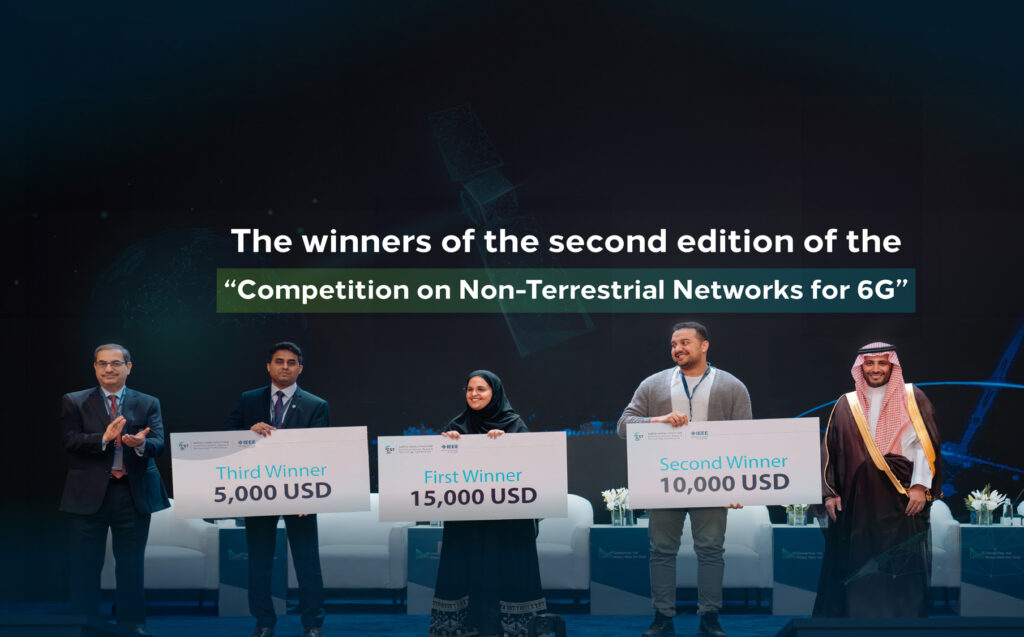
Awarding the winners of the 3rd edition of the IEEE “Non-Terrestrial Networks 2026” International Research Competition, the SpaceUp Competition award ceremony.Session
Partners & Sponsors Recognition Ceremony
An opportunity to thank all the sponsors and partners who have supported this event.Panel
From Ambition to Access: The Role of Satellite in Achieving Universal Access
- Connectivity FocusPresented by Connecting the World from the Skies
What will it take to connect the billions who remain unconnected, and what role can NTNs play in this? This session explores the current state of the global satellite connectivity landscape, the evolving roles of GEO, MEO and LEO operators, the emergence of direct-to-device services, and the technological, commercial and regulatory challenges that will shape the road to universal access.Isabelle MauroModeratorDirector General, GSOA
Mohammad S. AlJanoobiDeputy Governor of Spectrum, CST
Gilles BregantCEO, Agence Nationale des Fréquences (ANFR)
Dr. Badr N. AlsuwaidanCEO & President, ARABSAT
Mark RigolleCEO, Agility Beyond Space
Timothy Adi AshongDirector General, RASCOM
Christodoulos ProtopapasCEO and Managing Director, Hellas Sat
Keynote
Keynote Presentation: From Earth to Space: Integrating Terrestrial and Satellite Connectivity
- Keynotes, Tech Demos & Spotlights
Ashraf AlTahiniCEO, Aramco Digital
Panel
Growth Without Compromise: Balancing Connectivity Ambitions with Space Sustainability
- Connectivity and Sustainability FocusPresented by Connecting the World from the Skies and Space Sustainability Forum
Scaling satellite connectivity is no longer just a question of capacity and coverage; it is a question of responsibility. This session examines how connectivity ambitions depend on, and must be balanced against, responsible space governance; exploring whether the two goals are in tension or ultimately mutually reinforcing. It will take a broad view of sustainability, spanning not only orbital congestion and debris but also equitable spectrum access, interference-free use, and fair access to space for all nations.
Jorge CiccorossiModeratorHead, Space Strategy & Sustainability Division, ITU
Martin FentonDirector, Non Terrestrial Spectrum, Ofcom UK
Greg OliveauHead of Licensing and Regulatory Affairs, Amazon
Mohaned JuwadVice President, Middle East Policy and Regulatory Affairs, Viasat
David GoldsteinPrincipal Engineer, SpaceX
Yuemei HuExpert, Research Institute of Radio Spectrum Development, Utilization and Technological Innovation, China
Break
Demonstration
Spotlight Session #1 – Ookla: The Global State of D2D Through Real-World Measurements
- Keynotes, Tech Demos & Spotlights
Salem AskarDirector of Sales, Ookla
Panel
Direct-to-Device (i): Evolving Business Models, Partnerships and the Path to Commercialisation
- Connectivity FocusPresented by Connecting the World from the Skies
The first of two sessions on direct-to-device (D2D) connectivity will focus on the commercial and partnership landscape shaping the technology's development. It will explore emerging business models, evolving market structures, and the growing partnerships between satellite and mobile network operators. The discussion will examine how these collaborations can support the successful commercialisation and scaling of D2D services, while highlighting the broader social and economic benefits that widespread D2D connectivity can deliver.Herman SchepersModeratorFounder and Managing Partner, Policy Impact Partners
Amy MehlmanEVP & Chief Global Affairs Officer, Elveo Mobile
Barbee PonderGeneral Counsel & VP Regulatory Affairs, Globalstar
Abdullah AljohaniCTO, Neo Space Group (NSG)
Chafic TraboulsiSenior Vice President, Direct Sales, EMEA & APAC, Ookla
Majed Al YazeedySpace Business GM, STC
Session
A Shared Responsibility: Shaping Global Norms and Responsible Behaviour for a Sustainable Space
- Sustainability FocusPresented by Space Sustainability Forum
The role of international frameworks, transparency, standards and confidence-building measures. How can global coordination mechanisms foster responsible behaviour across all space actors – from legacy operators to new commercial mega-constellation entrants?Hamza HameedModeratorMember, ITU Secretary-General's Youth Advisory Board
Matej SigetGlobal Space Law Project, UNOOSA
Eng. Kamal AlharbiChief Space Technology and Application Officer, Saudi Space Agency
Olga VolynskayaAssistant Professor, Prince Sultan University (PSU)
Maher KhourySenior Vice President, International Sales, Leolabs
Sandeep BastolaChief Operating Officer | Satellite Systems Lead, Project-S
Keynote
Keynote Presentation: Fit for Purpose Regulation: Bringing Satellite Connectivity to all
- Keynotes, Tech Demos & Spotlights
Panel
Satellites and 6G: Integrating Satellite Systems into Future Connectivity Architecture
- Connectivity FocusPresented by Connecting the World from the Skies
How can multi-orbital and multi-frequency satellite systems be leveraged as part of future 6G architectures to deliver seamless, resilient and globally inclusive connectivity? What regulatory and technical foundations are required?Ahmed AlsohailyModeratorBoard Director, Sheba Microsystems
Rahim TafazolliFounder and Director of 5G Innovation Centre & 6G Innovation Centre, University of Surrey
Mohammed El-MoghaziExecutive Director of International Spectrum Affairs, NTRA Egypt
Chafic ChayaRegional Manager, Public Policy and Government Affairs, RIPE NCC
Ali CheemaDirector, Spectrum Regulations, Ericsson
Meshal AlanaziTechnical Planning and Development Director, ARABSAT
Panel
Direct-to-Device (ii): Technology, Spectrum and the Path to Scale
- Connectivity FocusPresented by Connecting the World from the Skies
Building on the D2D panel from day one, this session shifts the discussion to technology innovation, spectrum authorisation and the regulatory dimension. It examines the enabling technology and the regulatory frameworks required to deliver D2D at scale, including supplemental coverage from space, the IMT versus MSS debate, spectrum authorisation and licensing models, and the role of devices and OEMs. What will it take to scale D2D services globally without harmful interference or fragmentation across borders?Hussein Abul-EneinModeratorDirector, Head of Middle East, Access Partnership
Eric FournierDirector for Spectrum Planning & International Affairs, Agence Nationale des Fréquences (ANFR)
Satender YadavDirector - Global Solutions Engineering, Skylo
Amr AshourDirector, Regulatory Affairs, MENA, AST SpaceMobile
Shahbaz AliVP of Products & Standards, Sateliot
Abdulhadi AlHarthiGeneral Manager for Spectrum Planning, CST
Bader AllhiebVP, Infrastructure, STC
Break
Demonstration
Spotlight Session #2 - NSG: From Orbit to Outcome: Space-Based IoT for Mission Critical Operations, Assets & Sustainability
- Keynotes, Tech Demos & Spotlights
Hamoud Zaed Al ShammariTechnology Engineer, Neo Space Group
Mutaz Fawzi SindiTechnology Engineer, Neo Space Group
Ahmed AlrammahSenior Products Manager, Neo Space Group
Demonstration
Spotlight Session #3 – Project-S: Safeguarding Space Access and Exploration
- Keynotes, Tech Demos & Spotlights
Panel
Sustainable Orbits: Managing Congestion, Mitigating Interference and Preventing Debris
- Sustainability FocusPresented by Space Sustainability Forum
Managing congestion, debris mitigation, and the long-term sustainable use of orbital environments – this session will examine the policy levers and emerging technologies that can help achieve this. From active debris removal to green propulsion and responsible disposal, what voluntary and mandatory mechanisms are gaining traction? How do we ensure the orbital commons remains accessible for future generations, and what obligations do today’s operators have to those who follow?Waleed AlsalehModeratorDirector of Space Ecosystem Development, CST
Dr. Yehia Abdul-AzizFounder and CEO, ATON
Mishaal AshemimryManaging Director, Center for Space Futures
Ismael Moreno-GomezPrincipal, Analysys Mason
Abdulaziz bin HussainSpectrum Regulation & Policy Officer, ITU
Break
Session
Keynote Presentation: Sustainability and Evolution of Space Communications: The Role of the Regulator
- Keynotes, Tech Demos & Spotlights
Sidney NinceAdvisor to the Superintendency of Authorizations and Spectrum, National Telecommunications Agency (Anatel), Brazil
Panel
WRC-27 and Beyond: Spectrum Policy for the Future of Connectivity and Space
- Connectivity and Sustainability FocusPresented by Connecting the World from the Skies and Space Sustainability Forum
As we enter the final phase of preparations for WRC-27, attention turns to the spectrum decisions that will define the next era of satellite connectivity and space sustainability. This session brings together representatives working at the heart of the WRC process to examine the key NTN agenda items at WRC-27, and the path that lies ahead as the sector works to align global spectrum policy with long-term space governance. How should stakeholders prepare, and what outcomes are needed to balance connectivity expansion with a sustainable orbital environment?Ayman MaghrabiModeratorGeneral Manager for Spectrum Assignment, CST
Alexander KühnHead of Section, International & National Spectrum Management, BNetzA
Peng ZhaoVice President of Policy & Regulatory, GSOA
Cessy KarinaSenior Radiocommunication Engineer, ITU
Fatima KarimASMG Chairperson, GSA
Abdulrahman AlnajdiVP, Regulatory and Standardization, Neo Space Group (NSG)
Session
Spotlight Session #5 – Arabsat: Software defined satellite will pave the way for 3GPP-NTN implementation
- Keynotes, Tech Demos & Spotlights
Yasir HassanDirector, Transmission Operations, ARABSAT
Session
Spotlight Session #6 – Aramco Digital: Enabling Industrial AI Solutions with MCX over Satellite and MCX over Wi-Fi
- Keynotes, Tech Demos & Spotlights
Dr. Fahad AlqurashiTechnology Innovation and R&D Manager, Aramco Digital
Break
Panel
The Space Economy: Investment, Manufacturing and the Business Case for Sustainable Growth
- Connectivity and Sustainability FocusPresented by Connecting the World from the Skies and Space Sustainability Forum
The global space economy is on course to be worth more than a trillion dollars within the next decade, driven by falling launch costs, industrial-scale satellite manufacturing and a wave of private investment. Connectivity sits at the centre of that growth, with LEO constellations, non-terrestrial networks (NTN) and direct-to-device services attracting the largest share of capital and moving satellite from a niche complement to an integral layer of global telecoms infrastructure. This session will examine where value is migrating across the value chain – from launch and manufacturing to downstream connectivity, data and services – how satellite and terrestrial networks are converging, and how the sector can scale sustainably while remaining commercially viable and globally inclusive.Pacome RevillonModeratorCEO, Novaspace
Hazuki MoriLead in Space Technology, World Economic Forum
Gregory SmirinPresident, Muon Space
Mohammed I. AlmajedHonorary Chairman, AMENA Center, University of California, Berkeley
Abdulaziz AldhaherDirector of Africa & Middle East, Astranis
Ali AlshehriCTO, Aramco Digital
Panel
Connectivity on the Move: Air, Sea and Land
- Connectivity FocusPresented by Connecting the World from the Skies
Aviation, maritime and land mobility are among the fastest-growing segments for satellite connectivity. This session explores how air, sea and land connectivity is being reshaped by new LEO and multi-orbit capacity, flat-panel antennas and hybrid networks. What spectrum, regulatory and technical conditions are needed to deliver seamless broadband to aircraft, ships and vehicles across borders - and how can Earth Stations in Motion (ESIM) growth be accommodated alongside other services without harmful interference?Muhanned AlsaifModeratorSatellite Senior Specialist, CST
Zeina MokaddemChief Government Affairs and Regulatory Officer, Agility Beyond Space
Mostafa MousaLead, Licensing & Regulatory Affairs, Amazon Leo
Kendeas KarantonisDirector of Space and Innovation, Hellas Sat
Muhammad RajaVP Engineering and Services Management, OneWeb NEOM
Mohammed AlmutairiDirector of Regulatory Affairs & Spectrum Management, Neo Space Group (NSG)
Session
The Legal Framework for Space: International Space Law and the Path to Responsible Governance
- Special Focus Session
A 90-minute session examining the foundations and evolution of international space law and its application to the rapidly changing space environment, including the legal challenges posed by mega-constellations, active debris removal and direct-to-device services. Content and focus developed in partnership with UNOOSA.Peter MartinezModeratorDirector, Secure World Foundation
Rosanna Margarita HoffmanHead, Space Law, Policy and Sustainability, UNOOSA
Elina MorozovaExecutive Director, Intersputnik
Raeed Al-ManeeaGM Legal Affairs, Saudi Space Agency
Rachael OloreLegal Officer, Kenya Space Agency
Chehineze BouafiaHead, Regulatory Affairs, Space & Telecommunications, Eutelsat Group
Aya IwamotoDeputy Director, National Space Policy Secretariat, Cabinet Office, Government of Japan
Demonstration
Spotlight Session #7 – Satellite-Self Broadcasting (SS-B)
- Keynotes, Tech Demos & Spotlights
Demonstration
Spotlight Session #8 – Sustainability from Space: The Power of Earth Observation Satellite Services
- Keynotes, Tech Demos & Spotlights
Anthony ReaSenior Director of the Department of Earth System Data and Predictions, World Meteorological Organization (WMO)
Break
Panel
Space as Critical Infrastructure: Increasing Resilience and Enabling the Next Generation of Space-Based Services
- Connectivity and Sustainability FocusPresented by Connecting the World from the Skies and Space Sustainability Forum
Space infrastructure underpins far more than connectivity. This session examines how space-based systems — spanning communications, earth exploration, navigation, positioning, timing (PNT) and emerging in-orbit data centres — are becoming indispensable to global resilience. As commercial actors such as hyperscalers explore deploying large constellations to support space-based data processing, what are the implications for spectrum use, orbital sustainability and international governance? How can AI unlock the power of earth observation and other space-based systems to help deliver global resilience? How do we ensure that this expanding critical infrastructure remains secure, resilient and equitably accessible?Muhammad AlRabeiahModeratorAdvisor, CST
Eng. Muryah Al-ShahraniGeneral Manager of Space Systems and Infrastructure, Saudi Space Agency
Clémence PoirierSenior Researcher, Center for Security Studies (CSS), ETH Zürich
Nathan JuglardSenior Business Developer, Skynopy
Jean-François MorizurCEO, Cailabs
Connor McSharryBusiness Development Manager - Middle East Region, Slingshot
Session
Spotlight Session #9 – Regulation and NGSO Constellations Spectrum Monitoring
Emmanuel HoudetDirector of Mission Solutions, Kratos Space
Demonstration
Spotlight Session #10 – ATON: ATON Addresses a Critical Space Situational Awareness Gap in Africa and the Middle East
- Keynotes, Tech Demos & Spotlights
Break
Session
Shared Space: Expanding Access, Protecting What Matters
- Connectivity and Sustainability FocusPresented by Connecting the World from the Skies and Space Sustainability Forum
As more countries, institutions and commercial actors participate in the space economy, access to space brings both new opportunities and shared responsibilities. This panel explores how growing participation can be enabled while managing increasingly contested resources and protecting the scientific and societal value of space. The discussion will examine equitable access to spectrum, responsible growth, the protection of radio astronomy and the frameworks needed to ensure that space remains accessible and sustainable for future generations.Mohammed AlsehaliModeratorSpectrum Planning Team Lead, CST
Muneera Al MalkiSenior Space Engineer and Satellite Design Specialist, Bahrain Space Agency
Gudila MarickSpectrum Engineer, Tanzania Communications Regulatory Authority (TCRA)
Federico Di VrunoSpectrum Manager, SKAO
Adel Mohamed DarwishTelecommunications and Digital Policy Leader
Ahmed AlzubairiCo-Founder & Chief Technology Officer (CTO), SarSatX
Session
Spotlight Session #11 – Atenea/Artemis Deep Space Research Project
- Keynotes, Tech Demos & Spotlights
Fernando FilippettiProfessor, University of Buenos Aires on Athenea for Artemis Project
Session
Spotlight Session #12 – B2 Space: Beyond Satellites: Balloon-Based Platforms for Connectivity and Operations in the Stratosphere
- Keynotes, Tech Demos & Spotlights
Valentin CanalesCo-CEO & CTO, B2Space
Panel
The Space In-Between: HAPS and Stratospheric Systems as the Next Frontier in Connectivity and Earth Observation
- Connectivity FocusPresented by Connecting the World from the Skies
This panel brings together academics and industry experts to discuss High-Altitude Platform Stations (HAPS) and stratospheric systems as an emerging layer of connectivity and earth observation infrastructure. Panellists will explore how these systems bridge the gap between terrestrial networks and satellite constellations, offering unique advantages in coverage, latency, and cost-efficiency. Discussion will touch on current technical challenges, including platform endurance, energy management, and payload capacity at stratospheric altitudes. Panellists will also address regulatory and spectrum allocation issues that remain barriers to widespread deployment. The panel will highlight promising use cases across telecommunications, disaster response, agriculture, and environmental monitoring.Mohamed-Slim AlouiniModeratorAl-Khawarzmi Distinguished Professor, KAUST
Chris RobertsHead Delivery and Capture, BAE Prismatic
Alfredo SerranoDirector of EMEA, Sceye
Srinivas J. SettyFounder / Managing Director, BESPIN Technologies
Islam M. TanashAssistant Professor, Department of Electrical Engineering, Prince Mohammad bin Fahd University (PMU)
Session
Closing Remarks
- Connectivity and Sustainability FocusPresented by Connecting the World from the Skies and Space Sustainability Forum
Mario ManiewiczDirector, BR, ITU
Nothing matches those filters.
Email me my schedule































































Keynote
Joint Grand Opening & High-Level Keynotes — Welcome Addresses
Welcome addresses from the Secretary-General of ITU and the Governor of CST.
Session
Joint Grand Opening & High-Level Keynotes — Keynote Thought Leadership Roundtable: Where Connectivity and Sustainability Meet
Satellite connectivity is expanding fast. It is opening up new opportunities across a wide range of different sectors, as well as bringing coverage to remote and underserved communities. That growth also puts pressure on orbits, spectrum and the space environment, which are shared and finite. This opening panel brings together leaders from government, regulators, international organisations and industry to look at how connecting the unconnected can go hand in hand with keeping space safe, secure and sustainable. Topics include:- Balancing rapid constellation growth with the long-term health of the orbital environment
- Making sure the push to close the digital divide doesn't come at the cost of space sustainability
- Using spectrum and orbital resources efficiently and fairly as demand rises
- How regulators, industry and multilateral bodies can work together to align connectivity and sustainability goals
Keynote
Keynote Presentation: Sustainability and Security in Outer Space: Interconnected Agendas
Break
Keynote
Keynote Presentation: Connecting Worlds: IEEE’s Role in Engaging Academia and Industry and Developing Non-Terrestrial Networks
Session
Awards Ceremony
Awarding the winners of the 3rd edition of the IEEE “Non-Terrestrial Networks 2026” International Research Competition, the SpaceUp Competition award ceremony.Session
Partners & Sponsors Recognition Ceremony
An opportunity to thank all the sponsors and partners who have supported this event.Panel
From Ambition to Access: The Role of Satellite in Achieving Universal Access
What will it take to connect the billions who remain unconnected, and what role can NTNs play in this? This session explores the current state of the global satellite connectivity landscape, the evolving roles of GEO, MEO and LEO operators, the emergence of direct-to-device services, and the technological, commercial and regulatory challenges that will shape the road to universal access.
Keynote
Keynote Presentation: From Earth to Space: Integrating Terrestrial and Satellite Connectivity
Panel
Growth Without Compromise: Balancing Connectivity Ambitions with Space Sustainability
Scaling satellite connectivity is no longer just a question of capacity and coverage; it is a question of responsibility. This session examines how connectivity ambitions depend on, and must be balanced against, responsible space governance; exploring whether the two goals are in tension or ultimately mutually reinforcing. It will take a broad view of sustainability, spanning not only orbital congestion and debris but also equitable spectrum access, interference-free use, and fair access to space for all nations.
Break
Demonstration
Spotlight Session #1 – Ookla: The Global State of D2D Through Real-World Measurements
Panel
Direct-to-Device (i): Evolving Business Models, Partnerships and the Path to Commercialisation
The first of two sessions on direct-to-device (D2D) connectivity will focus on the commercial and partnership landscape shaping the technology's development. It will explore emerging business models, evolving market structures, and the growing partnerships between satellite and mobile network operators. The discussion will examine how these collaborations can support the successful commercialisation and scaling of D2D services, while highlighting the broader social and economic benefits that widespread D2D connectivity can deliver.
Session
A Shared Responsibility: Shaping Global Norms and Responsible Behaviour for a Sustainable Space
The role of international frameworks, transparency, standards and confidence-building measures. How can global coordination mechanisms foster responsible behaviour across all space actors – from legacy operators to new commercial mega-constellation entrants?
Keynote
Keynote Presentation: Fit for Purpose Regulation: Bringing Satellite Connectivity to all
Panel
Satellites and 6G: Integrating Satellite Systems into Future Connectivity Architecture
How can multi-orbital and multi-frequency satellite systems be leveraged as part of future 6G architectures to deliver seamless, resilient and globally inclusive connectivity? What regulatory and technical foundations are required?
Panel
Direct-to-Device (ii): Technology, Spectrum and the Path to Scale
Building on the D2D panel from day one, this session shifts the discussion to technology innovation, spectrum authorisation and the regulatory dimension. It examines the enabling technology and the regulatory frameworks required to deliver D2D at scale, including supplemental coverage from space, the IMT versus MSS debate, spectrum authorisation and licensing models, and the role of devices and OEMs. What will it take to scale D2D services globally without harmful interference or fragmentation across borders?
Break
Demonstration
Spotlight Session #2 - NSG: From Orbit to Outcome: Space-Based IoT for Mission Critical Operations, Assets & Sustainability
Demonstration
Spotlight Session #3 – Project-S: Safeguarding Space Access and Exploration
Panel
Sustainable Orbits: Managing Congestion, Mitigating Interference and Preventing Debris
Managing congestion, debris mitigation, and the long-term sustainable use of orbital environments – this session will examine the policy levers and emerging technologies that can help achieve this. From active debris removal to green propulsion and responsible disposal, what voluntary and mandatory mechanisms are gaining traction? How do we ensure the orbital commons remains accessible for future generations, and what obligations do today’s operators have to those who follow?
Break
Session
Keynote Presentation: Sustainability and Evolution of Space Communications: The Role of the Regulator
Panel
WRC-27 and Beyond: Spectrum Policy for the Future of Connectivity and Space
As we enter the final phase of preparations for WRC-27, attention turns to the spectrum decisions that will define the next era of satellite connectivity and space sustainability. This session brings together representatives working at the heart of the WRC process to examine the key NTN agenda items at WRC-27, and the path that lies ahead as the sector works to align global spectrum policy with long-term space governance. How should stakeholders prepare, and what outcomes are needed to balance connectivity expansion with a sustainable orbital environment?
Session
Spotlight Session #5 – Arabsat: Software defined satellite will pave the way for 3GPP-NTN implementation
Session
Spotlight Session #6 – Aramco Digital: Enabling Industrial AI Solutions with MCX over Satellite and MCX over Wi-Fi
Break
Panel
The Space Economy: Investment, Manufacturing and the Business Case for Sustainable Growth
The global space economy is on course to be worth more than a trillion dollars within the next decade, driven by falling launch costs, industrial-scale satellite manufacturing and a wave of private investment. Connectivity sits at the centre of that growth, with LEO constellations, non-terrestrial networks (NTN) and direct-to-device services attracting the largest share of capital and moving satellite from a niche complement to an integral layer of global telecoms infrastructure. This session will examine where value is migrating across the value chain – from launch and manufacturing to downstream connectivity, data and services – how satellite and terrestrial networks are converging, and how the sector can scale sustainably while remaining commercially viable and globally inclusive.
Panel
Connectivity on the Move: Air, Sea and Land
Aviation, maritime and land mobility are among the fastest-growing segments for satellite connectivity. This session explores how air, sea and land connectivity is being reshaped by new LEO and multi-orbit capacity, flat-panel antennas and hybrid networks. What spectrum, regulatory and technical conditions are needed to deliver seamless broadband to aircraft, ships and vehicles across borders - and how can Earth Stations in Motion (ESIM) growth be accommodated alongside other services without harmful interference?
Session
The Legal Framework for Space: International Space Law and the Path to Responsible Governance
A 90-minute session examining the foundations and evolution of international space law and its application to the rapidly changing space environment, including the legal challenges posed by mega-constellations, active debris removal and direct-to-device services. Content and focus developed in partnership with UNOOSA.
Demonstration
Spotlight Session #7 – Satellite-Self Broadcasting (SS-B)
Demonstration
Spotlight Session #8 – Sustainability from Space: The Power of Earth Observation Satellite Services
Break
Panel
Space as Critical Infrastructure: Increasing Resilience and Enabling the Next Generation of Space-Based Services
Space infrastructure underpins far more than connectivity. This session examines how space-based systems — spanning communications, earth exploration, navigation, positioning, timing (PNT) and emerging in-orbit data centres — are becoming indispensable to global resilience. As commercial actors such as hyperscalers explore deploying large constellations to support space-based data processing, what are the implications for spectrum use, orbital sustainability and international governance? How can AI unlock the power of earth observation and other space-based systems to help deliver global resilience? How do we ensure that this expanding critical infrastructure remains secure, resilient and equitably accessible?
Session
Spotlight Session #9 – Regulation and NGSO Constellations Spectrum Monitoring
Demonstration
Spotlight Session #10 – ATON: ATON Addresses a Critical Space Situational Awareness Gap in Africa and the Middle East
Break
Session
Shared Space: Expanding Access, Protecting What Matters
As more countries, institutions and commercial actors participate in the space economy, access to space brings both new opportunities and shared responsibilities. This panel explores how growing participation can be enabled while managing increasingly contested resources and protecting the scientific and societal value of space. The discussion will examine equitable access to spectrum, responsible growth, the protection of radio astronomy and the frameworks needed to ensure that space remains accessible and sustainable for future generations.
Session
Spotlight Session #11 – Atenea/Artemis Deep Space Research Project
Session
Spotlight Session #12 – B2 Space: Beyond Satellites: Balloon-Based Platforms for Connectivity and Operations in the Stratosphere
Panel
The Space In-Between: HAPS and Stratospheric Systems as the Next Frontier in Connectivity and Earth Observation
This panel brings together academics and industry experts to discuss High-Altitude Platform Stations (HAPS) and stratospheric systems as an emerging layer of connectivity and earth observation infrastructure. Panellists will explore how these systems bridge the gap between terrestrial networks and satellite constellations, offering unique advantages in coverage, latency, and cost-efficiency. Discussion will touch on current technical challenges, including platform endurance, energy management, and payload capacity at stratospheric altitudes. Panellists will also address regulatory and spectrum allocation issues that remain barriers to widespread deployment. The panel will highlight promising use cases across telecommunications, disaster response, agriculture, and environmental monitoring.
Session
Closing Remarks
Nothing matches those filters.